Day: April 30, 2025

  • Vocal Science – Flight to the Universe

    In the previous article, entitled ‘How Not to Become a Singer’, I outlined, in a humourous and sarcastic way, many of the problems that hinder most aspiring singers. In this month’s column, I would like to seriously offer you a different approach which will hopefully help you learn how to reach your full potential as a singer. Whenever I conduct one of my educational seminars, I always start by saying to the audience that I did not come here to prove anybody wrong or to prove myself right; I came to offer something different and you can accept it or reject it. And on that note, I would like to talk about two things that may at first seem different or even rather conflicting in nature: Science and Spirituality. Your first response may be something along the lines of “I hated science in high school” or “I sing rock music not gospel.” Therefore, I would like to invite you to open your mind and entertain the possibility of seeing yourself and your voice in a completely different way.

    I call my method of vocal instruction Vocal Science because I believe that I have developed a proven scientific method to producing sound and producing the best possible vocal performance. The first point to understand is that sound is a physical material body and it travels as such upon the laws of physics and geometry. The second point to understand is that you can compare your body to a very complex, high level computer, and your anatomy and physiology represent the hardware. As you probably know, software is essentially a set of instructions, and hardware is useless unless you have the proper software running on it. Your brain is like a computer’s CPU and everything you do (i.e. walking, talking, eating) is essentially the process of running software. The act of singing works the same way and your voice is the output resulting from your physical hardware and your software, i.e. training or lack thereof. Unfortunately, we cannot simply drive to Future Shop and buy the software that will make us a great singer (or painter, athlete or doctor). We acquire our software through learning. There are two ways you can learn: through your own experience or by having someone teach you. When I start instructing students, I not only have to give them the proper program, but I have to DEBUG or UNINSTALL the previous software or deal with a “VIRUS” on their system that they have somehow caught. Then through the method of visualization and special exercises we can access the cell in the speech center of your brain which is responsible for the voice (singing and speaking) and input the instructions for it to do exactly what we want it to.

    In 24 years of teaching, I have discovered that there are four components that make up the mechanism which allows your voice to reach its fullest capacity: Physical Support of your body, structure, placement of the sound and, as a final outcome, the projection of the sound to its aimed destination. Complying with these components will guarantee that there is no pain or strain on your vocal anatomy.

    There is one thing that sets human beings apart from complex machines running algorithms: our spirits. In many ways, singing is a lot like the martial arts. Most Martial Arts are not only techniques for fighting or self-defense, but are also philosophies of how to live your life. They consist of good technique and a spiritual component. I approach singing the same way. Good technique is the basis upon which a singer’s spirit is free to soar. It is your spirit (along with your completely individual physical body, i.e. no two people have the exact same DNA) that makes you different from anyone else and makes you unique. (Why try to sound like Celine Dion or Mick Jagger. The world already has one of each.) Only when you sing with proper technique are you able to project a voice that is purely yours and reflects your individual self. It is your spirit that separates a technically good performance from one that is truly authentic. Many of my past and present students have not only developed good technique but have improved in all aspects of their life or have changed their lifestyle completely. They are healthier, more positive, and more fulfilled. The process of learning proper balance for singing will reflect in more balance in your life. Conversely, a singer with incorrect technique cannot give a truly special performance because their spirit, i.e. voice, is inhibited by “bugs” or “viruses” in their software. By experience, many people are coming to me and dying to express their emotions and release their voice. I help them to discover and uncover it and let it soar. The congruency of the physical sound and the emotional rapport with the audience produces the desired total performance, i.e. combination of technical skill and artistic merit.

    Vocal Science is at its most basic an alignment of the subconscious mind, conscious mind, and physical body, which are then put into total integration and synergy with each other. This is the formula for the ideal vocal performance. By using specially designed exercises with the appropriate repetition, you can program your mind so that when you sing you will perform many of the technical aspects of singing subconsciously. Seventy-five per cent of your performance will come out on automatic pilot and you will need only a small amount of conscious effort to put your performance in place. Your physical body is the condition of your hardware; your spirit is the individual intangible that will make your voice and performance something that is unique and reflective of your state of being. The release of your spirit into the performance of a song is dependent upon using the correct technique.

    The act of singing is then a combination of good technique and your individual self. I have titled the book which I am in the process of writing: Vocal Science: Flight to the Universe, to reflect my belief that a scientific approach to vocal technique is what will allow your voice (i.e. spirit) to take flight and soar. I will expand upon these ideas and provide more detailed information in the following chapters.

  • How Not to Become a Singer (And Work Harder at Doing It)

    How NOT to Become a Singer (And Work Harder at Doing It)

    I thought that in this chapter I would vent a little of my frustration and have some fun while sharing some of the insights I’ve gained over the years regarding myths about learning to sing.)

    Since everyone knows it takes years of arduous work to become even a moderately good singer (myth #1), for once I’ll go with the status quo and add what I know to it, so as to assist people in working harder at taking even longer at it. Most people have this under control, so this article is to keep it that way and is also for those few who may be breaking this long tradition (like myself) and doing it faster, easier and more naturally.

    The first point is to be sure and drop your jaw while singing (a little is good but more is better) because it traps the sound in the throat preventing it from being lifted off the larynx to the upper palate, thru the four main vocal chambers or cavities and outward with anything close to your maximum power.

    The second, and equally important point, is to sing from your diaphragm and push your stomach out. This prevents the upper diaphragm from expanding fully, therefore limiting your air supply and increasing the likelihood that you’ll run out of air depending on the length of the note or phrase you’re singing. An excellent way to train yourself for this is to lay on the floor and find yourself a nice thick book to place on your abdomen (the Toronto yellow pages works great) and “pump paper” up and down until you can stick that stomach out so that even a punch won’t phase you. Then you’ll be sure that the upper diaphragm will never open fully.

    Next you should sing with your speaking voice i.e. sing each syllable of your lyrics using your vocal cords with your chin down and without any support or structure to it (“closing” each syllable) which characteristically produces a “pear” shaped opening inside the mouth and cuts the sound short making it less than truly sing-able. This will help avoid lifting the sound off of the vocal cords, bouncing the sound off the upper palate (“opening” the syllable) and projecting the properly structured sound outward which produces a round “apple” shaped sound inside the mouth and making the sound, unfortunately, more sing-able. (This is also, by the way, why people with accents tend to lose them while singing. More about this in future issues.)

    While we’re on the subject of the shape of things, be sure and breath only through the nose because it tends to make the shape inside the mouth more elongated or banana shaped and the sound more nasal. Great eh!

    Another way to make more work for yourself singing (and have less as a singer) is to make certain that as far as your head goes, you sing only with your jaw and mouth including your tongue and lips. This excludes the use of your facial muscles and reduces the likelihood that any resonance in those nasty head cavities I mentioned earlier will take place causing your sound to be amplified (God forbid) and unavoidably reflected off the upper palate and projected outward to the audience.

    Tilting the head back is very important since it directs the trajectory of the sound away from the audience. This is particularly useful in bands because it not only means that you will have to put more energy into getting the sound out to the audience but it also means that you will be directing some of the sound back behind you to set a proper example for any of your band members that might be developing a “natural” singing voice.

    Bending your knees is a great technique for limiting your power as a singer. Since sound is a physical thing, bending your knees changes the ratios relating to your height and the arc of the trajectory for the sound will cover much less distance , which is what you want right?

    Another very relevant issue that I would like to cover in detail in the future and that I’ll just touch on here is diet. One of the single most important causes of throat problems with singing is mucous. Sound can’t lift off of thin air, it lifts off the vocal chords. Dancers don’t dance on carpet, they dance on hardwood floors. This is so they can get a proper lift. In the same way, you can prevent a really sharp “lift” with each and every note you’re singing if you have lots of mucous and phlegm on your cords and in your system. The best foods to eat to get this way are animal products especially beef, pork, milk, eggs and cheese, although all dairy products will do a really great job of getting you there. Foods to avoid would be mucous burning foods and herbs (cayenne tops the list) or fresh fruits and vegetables, grains, legumes and anything else whole and unprocessed that doesn’t have a face.

    One of the best ways to practice not becoming a singer that I personally know of is to sing scales. If you look even superficially at the songs you’re singing, you’ll see that they are composed of a certain finite number of specific combinations of sounds, durations and pitch. Singing scales has nothing whatsoever to do with developing yourself to be able to vocally anticipate these in any song. So sing lots of scales and don’t worry, no one either in Russia (my teachers were the best available) or here in the west has ever made any connection between scales and training the voice to do what’s needed to sing properly to me ever. So there’s no danger of you becoming accomplished fast with this approach. (Personally, I developed my own set of exercises based on this subset of sounds, durations and pitch that train the voice to anticipate any part of any song of any style easily but you don’t want to hear about it.)

    Finally, be sure and spend time working each of these exercises individually and never collectively because even the thought of integrating or harmonizing the various aspects of your singing might slow you down in your efforts to slow down your singing progress, and that would never do.

    So, until next time, work long and hard, and whatever you do, if you want to avoid rapid easy vocal development at any level, stay as far away as you can from me and the Royans School. Or turn the page and learn “how to become a singer”.

  • Vocal Producer in the Recording Studio – What’s That? Does it have a Meaning and Significance Conveyed in the English Language, or Should I Perhaps Communicate in ‘Avatarian’?

    Vocal Producer in the Recording Studio – What’s That?
    Does it have a Meaning and Significance Conveyed in the English Language, or Should I Perhaps Communicate in ‘Avatarian’?

    Everybody knows now that after the premier of the movie ‘Avatar’, people started to learn what’s called now ‘Avatarian’ language.

    If you ask me, they’ve spoken Avatarian for quite a while now and even much before the movie was premiered. I certainly have difficulties to understand some of my potential clients and, seems to be, our languages are not corresponding with each other, since I’m still speaking pure English, in a better understanding of that word.

    Similarly, when I’m still speaking English, and trying to plead to the music industry professionals, music producers included, they think that I speak Avatarian, whatever that’s supposed to mean. They’re simply unable to understand why they would need a vocal specialist/vocal expert/vocal producer for God’s sake, in the studio with them. Meanwhile, some of those producers who never sang a note themselves ever before, are trying to give instructions to the vocalists how to produce the certain sounds to their satisfaction.

    Obviously, if we’re talking about Celine Dion or Peabo Bryson, then granted, they just needed the direction from their producers, as they were extremely vocally sound and did not require extra vocal care. But that’s the exception of the rule, especially if we’re talking about up and coming artists. Those music producers, at best, know what they want to hear, but in the majority of cases, they do not know how to pull out the best performance from the vocalist of almost any calibre.

    That’s where I come in and try to explain that I can do exactly that, and while obeying the instructions given to me and the artist by the producer, nevertheless, produce exactly what was asked of both of us. It sounds very simple, but not easy at all. Not easy, because the majority of those producers are getting into competitions with me playing the role of the vocal producer – instead of being thankful for a very much so needed skill in the recording studio, they’re simply being ignorant.

    All of this also reminds me of a television show Rockstar Supernova in 2006. Needless to say that my most talented student Lukas Rossi has won this competition with the flying colours and put to shame the bass player Jason Newsted of Metallica, who in some similar to Avatarian language then, was trying to explain to Lukas how to release his ‘gift’ while dropping his jaw down to his knees to look and sound like a ‘pregnant ballerina’. Lukas, to his credit, was very much so resistant to those comments, as he knew better than that. His argument back to all of them involved in the production was, ‘I’ve been singing for over fifteen years now and never lost my voice’. The hired vocal coach and Jason Newsted were insisting that Lukas would ‘open his throat’ to produce what they were looking for. All of those comments were completely against and irrelevant to all of what Lukas knew by that point and what made him a successful artist in the first place.

    I could compare all of this to the precedent of me coming up to Tommy Lee, the greatest drummer of all times, and telling him to lift his drum stick in a certain way while myself never having played the drums in my entire existence. How valid would my comments be and what expertise would I base my comments on?

    Meanwhile, back to Rockstar Supernova television show, quite often, before the beginning of the show, there were scrolls showing up with the saying, ‘Lukas knows some kind of unknown vocal technique. Let’s find out what it is’. They found out alright, and to their credit still chose the best of the best, Lukas Rossi.

    However, on a positive note, there are engineers and producers that are still in existence who embrace exactly that – the coaching, consulting, expertise and production in the studio during the vocal session.

    I’ve been working in Canada in numerous studios for over 30 years now. From one very prominent engineer/producer, I’ve learned that in the old style console, there is a magic button – fader – which could do wonders, especially if it’s done manually, hands on console. That’s what the old school producers and engineers call ‘Classic Mix’ or ‘Vocal Ride’. Almost three decades ago, I was offered to ‘play’ with that button and now I think I mastered it as good as nowadays’ population mastered the Avatarian language (lol).

    Just recently I sent my production to one of the prominent producers in UK, who, seems to be, has a much more open mind and more than adequate expertise. The version with no rides was vastly different from the version with rides and he acknowledged that. Yes, the fader button could be mistaken for the volume button, but not only volume and dynamics could be achieved while subtly and with care and knowledge moving that button along the vocal lines.

    Working with that magic button creates dynamics, inflections, emphasis, separation of the syllables and other benefits, which come out and become apparent once I am done with it. Since I do it manually (hands on the console) you can literally hear and sense my feel on top of the artist’s performance.

    The UK producer added after listening to the demo sent to him of my up and coming artist who he will be working with down the road. ‘Riding the vocal is a great technique as it usually means you can get away with less compression and, like you say, bring out particular details of the performance.’

    That said it all, pretty much, and confirmed my belief, one more time again, of my usefulness in the studio above and beyond producing the sound and extracting the best possible and authentic vocal performance out of the artist.

  • Vocal Science™ Method: Vocal Innovation and Modernization

    What does the Vocal Science™ method entail?

    And what does it mean: “Vocal Innovation and Modernization”, and why, in this case, it takes place…? 

    The answer is:

    • First of all, Vocal Science™ Method and its revolutionary voice/vocal technique allows the voice to work at the fullest capacity possible with positively no pain or strain on the vocal anatomy.
    • Second of all, It works wonders for the healthy voice, but if the vocal cords or the vocal box in general are already damaged (or pre-damaged), this technique will help to restructure the voice into a different set of muscles (facial/sinus cavities), which will play the role of the natural amplifier or resonator, while simultaneously being put to work in full conjunction and coordination with the abdominal muscles and where the latter will provide the support for the sound to be lifted off of the vocal cords and off of the vocal box, thus in turn, the use of the throat, larynx and the vocal cords will be minimized and practically eliminated.
    • In the case of the Non-Surgical Voice Repair, the natural herbs and remedies will be administered to greatly aid the healing of the vocal anatomy, which presumed that the latter had been released from the harmful pressure of the sound via the application, nevertheless, of revolutionary voice/vocal instruction.

    Now My Reader, this is your riddle….  How does Vocal Science™ Method compares to conventional vocal coaching?

    The answer is – IT DOESN’T!!!

    Conventional vocal coaching suggests to do the exact opposite of the above – i.e., the useless exercises and scales are offered, which are drowning the voice lower into the anatomy and, thus, disturbing the anatomy and inevitably causing its damage.

    Those exercises are not applicable to any singing (and of course to proper speaking) and therefore, nobody was ever able to figure out how to apply those, no doubt, “doomed” exercises which are not leading, by any means, to any desirable results. 

    Question – Does the Vocal Science™ method suggest to the artist to change their “natural”, life long adapted habits?  

    Answer: NO, IT DOES NOT. However, the experience shows that while going through the process, the artist stops not only the bad vocal habits, but also naturally conquers bad habits like smoking, drinking and using drugs, whereas, no doubt, they affected the flora of the throat. In fact, the Vocal Science™ technique is such that the vocal anatomy is engaged in the absolute minimum capacity.  

    So, even in an undesirable scenario, where the artist employs bad habits such as smoking, drinking, using drugs or what have you, the Vocal Science™ Method and technique will be applicable and highly usable even in the cases described above.   

    With that said, it is not mandatory for the artist to change their familiar lifestyle and feel miserable while adapting Vocal Science™ Method and its very unconventional vocal technique.  

    THE VOCAL SCIENCE TECHNIQUE POSITIVELY WORKS UNDER ANY CIRCUMSTANCES!

    Since 1976 (graduating from St. Petersburg Music Teachers Collage) Vocal Science™ Method was born and took its first steps. 

    Today, in Century 21, via decades of extensive experience and expertise the Vocal ScienceTM Method leaped to the next level of, so to speak, “Forensic Science.” 

    During that tremendous jump, it got fully reimagined and modernized and thus got consistent in its nature with Century 21 and possibly… Century 22! 

  • 4 AM Talent

    Vocal Engineering – Sound Constructing and Re-constructing

    • Easy, Fast, Effective, Efficient
    • Save Money, Time and Aggravation
    • Reduce Studio Costs
    • Greater Than Professional Sounding Results
    • Save Your Voice
    • Do Your Songs Justice
    • Voice Sound Editing & Mixing

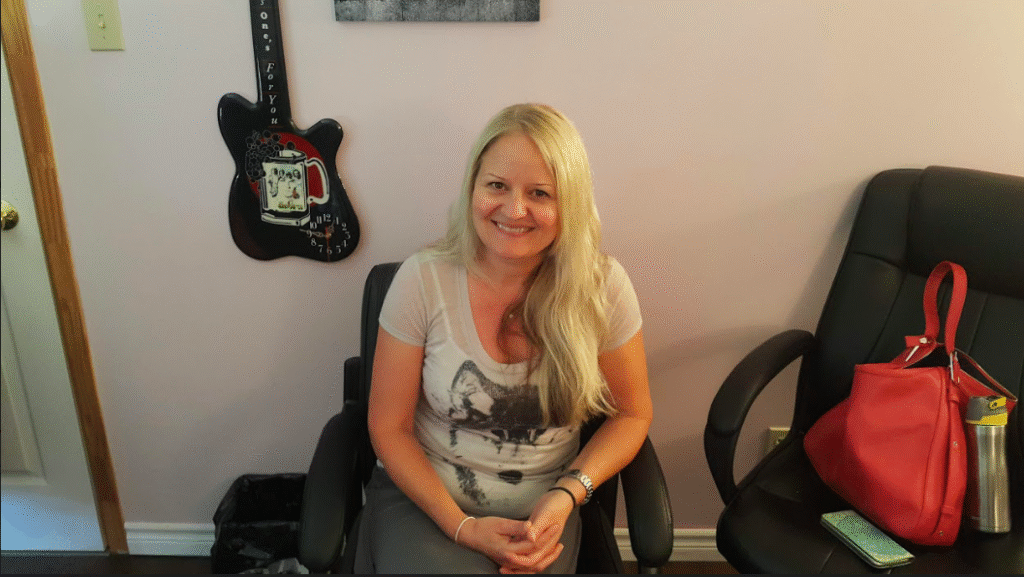
    Master Vocal Consultant/Coach/In-Studio Vocal Expert Diana Yampolsky will guide you through each and every syllable of every phrase that you sing so that you will have the recorded result that you have always dreamed of and aspired towards. She will also teach you how to consistently reproduce your professional sounding recorded vocal in a live setting.

    If you are interested in obtaining further information, please Contact Us.

    Artist Career Development

    Career Development

    Royans Universe Records
    An independent record company that develops artists to a professional level so that they will be marketable and ready to be picked up by a Major Record Label or Management Company.
    Royans Universe Records assists artists with training, song selection, production, and recording.

    4 A.M. Talent Development & Artist Management Group Inc.
    The 4 A.M. Group assists artists with talent development and marketing – photography, videography, website development, radio promotion, media coverage, performances, etc.

    Artist Placement and Industry Relations
    We are developing affiliations with many major record labels and work hard in helping our students find work within the music industry.

    4 A.M. Artists:

    Denise Roy

    Christopher Kraft

    Copyright© 4 A.M. Talent Development & Artist Management Group Inc.

  • Vocal Science – Diana Yampolsky’s Professional Credentials

    Since 1980, Diana has been teaching in Toronto, specializing in voice. The Royans Professional Vocal School was opened in 1984 in order to teach her technique to the public. Today, Diana works with aspiring singers and established artists, as well as many fine producers, engineers and managers within the music industry. Through her Vocal Science Immersion Program, Diana regularly instructs clients from around the world.


    This article highlights the history and founding of The Professional Vocal School, AKA The Royans School for the Musical Performing Arts.

    Read the story of the school which is today over 39 years old (Since 1984) below:
    https://www.heritagetrust.on.ca/en/index.php/myontario/stories/diana-yampolsky

  • Speech Development Program

    – The Total Communicator Program –

    This unique program, aimed at presenters and speakers, employs a revolutionary approach to voice mechanics (and to the person as a whole), in order to dramatically improve all elements of the voice (projection, tone, clarity, enunciation and pronunciation) while providing the specific Vocal Science technique to make speakers more confident and effective.

    We teach you the skills to make you more confident by improving your voice, your speech, delivery style, and body language to engage and captivate your audience.

    While good content is necessary, credibility is lost quickly and easily if not delivered properly. It is essential to capture your audience’s attention at the start of your presentation by generating the right rapport, and then to continue to engage your audience throughout the entire speech.

    All of our programs are designed for speakers who are looking to develop communication skills and reduce nervousness when speaking in front of an audience.

    A personalized and customized program is also available to ensure that your particular goals and challenges are addressed.

    Elements emphasized in the program include:

    • Voice Projection
    • Improving voice pitch, tone, depth
    • Interaction with the audience
    • Presentation rehearsal
    • Establishing a natural and moderate rate of speech
    • Using gestures appropriately to emphasize the message
    • Understanding how to vary pitch and volume to avoid a monotone delivery
    • Eliminating habitual nervous behaviours like pacing, stalling, excessive hair touching, etc…
    • Alternative Speech Therapy and Treatment for Speech Impediments as required

    See our Non-surgical Voice Repair section for details on how we can help you to find your natural voice tone and eliminate the pain and strain on your vocal anatomy!

    Check out one of our related and informative blogs; Vocal Science: Fix your Voice and Experience “Shocking” (So To Speak) Side Effects!

    You can also check out one of our other related blogs; Singing Voice And Speaking Voice. Color And Tone… Can It Be Improved, Enhanced or, Outright Changed?

    Copyright© 4 A.M. Talent Development & Artist Management Group Inc.

  • Lisa case study

    High School Math Teacher from Stouffville, Ontario Canada.

    (Case Study Log)

    Friday, May 18, 2018, and Monday, May 21, 2018

    When I attended the first introductory session and the first lesson with Diana, I really didn’t know what to expect.  I had read many reviews and testimonials but I didn’t really know much about her technique besides that it was innovative.  I wasn’t sure what the title “Vocal Science” had to do with anything.

    I was first struck with Diana’s straightforward manner.  She tells it like it is.  I appreciate people who are direct.  Constructive criticism is the only way to really learn and improve.  She had a clear grasp of my potential and where I might be able to take my voice.  I’ve never had any aspirations to turn my singing into something on a professional level, but I appreciated that her lessons were measured (I wasn’t going to be taking endless lessons for years) and defined (we were going to go from A to B).

    When we began the exercises, I started to get a feel for what her technique was about.  It was quite different from what my limited foray into voice lessons had taught me.  Diana’s method made sense from a scientific and mathematical standpoint; for example, tying the diaphragm and the breath to the facial muscles, bypassing the strain on the vocal cords.  Also, her visualization of circles of sound, to me, seemed set on a mathematical grid, an x-y axis, with the height and breadth defining the sound.  Her technique also made sense to me on a physical level — the athletic posture to enhance breathing, not the traditional stance of vocal instruction emphasizing the extension of the diaphragm.  Being a math teacher and someone always interested and involved in fitness, all of this appealed to me.

    While the system seems elegant and straightforward, putting it into practice was something else entirely.  It sounded easy but was ever so hard to implement.  It’s like superimposing puzzle pieces to allow one small beam of light to pass through.  It’s the alignment of breath, of musculature, of sound, of position.  With Diana’s direction, if you are able to lock all of those things down, you can definitely hear an immediate effect.  It’s like turning on a switch.  Her exercises are an attempt to engrain all of these elements into muscle memory so that it eventually becomes second nature as a singer (or speaker), and something that a speaker/singer can apply to any vocal scenario/song.

    Friday, May 25, 2018

    It was at this session when I realized the amount of work involved in this process.  Yes, Diana is the professional and magic does happen, but it’s not with putting your share of hard work and persistence into the process.  It’s often very humbling.  It’s often frustrating.  Ultimately; however, when you’re able to get the sound that Diana is after, it’s very satisfying.  The day after this session (on Saturday), I attended a party at a friend’s place.  Many of my friends are musicians and we often jam and sing together.  I sang a number of songs and I felt confident and my voice felt strong.  My friends complimented me on my singing, but it was my husband who defined the difference in my voice.  He said my confidence and my clarity had improved.  Although I hadn’t really been thinking about the techniques I had worked on with Diana apart from breathing posture, I think, at some level, I was already building her techniques into my subconscious.

    Sunday, May 27, 2018

     As my grasp of the facial positions and postures increases, Diana raises the bar in terms of her expectations, as all good teachers do.  She begins to zero in and listen more closely (if that’s possible for her as she can hear the smallest of breaths).  She demands more precision and that’s exactly the direction in which I’m hoping to go.  The number of sessions together are short, and so we need to define the process in as much detail and with as much perfection as possible.  It’s amazing to me that much of our lesson involves just my speaking voice when I’ve come to her for vocal singing lessons.  The results speak for themselves, though.  As they say, you can’t learn to run until you know how to walk.  It’s not about learning how to sing.  It’s about building the blocks that allow for the optimal sound with the least amount of strain on your vocal cords.

    Wednesday, May 30, 2018

    Today’s lesson was also eye-opening.  At the end of our session, we began to get into more of the singing techniques and applying them to what I’ve already learned in terms of producing sound effectively.  Diana played a recording of a 3-part singing practice.  I managed to get through the first part and look forward to practicing this again next session.  She also played the other parts for me so that I could understand what was coming next.  The practice was well-constructed in that it kept building in complexity and covered many of the vocal scenarios one might experience in a song:  speeds, tonal changes, clarity – all of these were required as one progressed through the sequence.  I don’t know if I could ever complete this practice – it becomes very advanced – but I consider it a challenge to get as far as I possibly can.  I’m confident that with Diana’s guidance, I’ll do just that. 

  • Michael and Raphaelle Tamura

    Celebrated Spiritual Teachers, Mentors, Radio Announcers, Clairvoyant Visionaries – from Sacramento, California, USA.

    Please see below –  Michael’s and Raphaelle’s feedback on Diana’s training at their home town in Sacramento, California:

        “There is no one like Diana Yampolsky and her work in the world. If you want to be trained by her, please be prepared for a true “boot camp” of vocal training with a most unusual and gifted teacher. The training isn’t just of the voice but of the “whole self” in a sense – she uses an interesting mixture of techniques to help her clients get back on track with their real voices for speaking and for singing – and for how the voice is to be used for the rest of a person’s life.    

    My husband, Michael J Tamura, had vocal damage due to a mistake made in a non-related (to vocal cords) surgery and my own voice has been having intense issues for years due to acute allergies and long-term incorrect use of my voice. We are both spiritual teachers (Michael is an author and I am a soon-to-be-published author as well) plus we are radio show hosts and use our voices every day in our for our TeleClasses and seminars, so a great-sounding voice is beyond important to both of us. Also, I lost my singing voice with the allergies and feel it is now starting to come back in full force. Further training will get me there 100%, I’m sure (I took the first thirty hours of training for my speaking voice only and Michael took two rounds of thirty hours for working with his surgery-damaged voice. To improve my singing, I will at some point take another round from Diana. I am utterly thrilled with the improvements I already see.)    

    Diana is a highly experienced, technical voice expert with a long and successful history in helping many people from every kind of background you can imagine with the healing of a huge variety of vocal issues – all without surgery. Important Note: This training is not for the faint of heart: You must have a full commitment, an open mind, humor and a true willingness to heal your voice in this unusual yet natural, non-surgical way. When you do take her vocal training, you’ll be so incredibly glad you did. Both of our voices have improved beyond our expectations with the level of training we have taken with her, and they continue to improve each and every day.

    Thank you with all of my heart, Diana! These folks who suffer from voice disorders really need you & your teachings – they are so lucky to find you, really really lucky!

    As for us, yes, we continue to “smile and bite”!!

    Have a lovely day.

    Love,

    Raphaelle”

  • Michael J Tamura

    Celebrated Spiritual Teachers, Mentors, Radio Announcers, Clairvoyant Visionaries – from Sacramento, California, USA.

    See below Michael J Tamura’s story – 4 months after undergoing our voice repair course and treatment:

    Two years ago, I underwent surgery that had nothing to do with my throat or my voice, but when I awakened from the anesthesia, I had no voice. Zilch. Barely a whisper. I was assured by all of the doctors involved, from the anesthesiologist to the surgeon, that it was completely normal after surgery. It wasn’t normal to me, because I’ve had a much more involved and longer surgery before and when I came to after that one, I could speak as clearly as I could before the surgery. I kept returning to the doctors and they kept telling me to be patient and my voice will return to normal. First, I was told it would be within a few days. Then, it was a week, two weeks, a month, two months, and then they told me it might take a few months. After the one month mark, I knew something was not right and that I was just being given the run-around, because no one wanted to be sued. 

    So, I sought out specialists in laryngology. I went to a local ENT doctor who, at first, wouldn’t believe me, but, finally agreed to check my throat and vocal apparatus. He was surprised that my left vocal cord was paralyzed. It was beyond his scope of expertise to treat it, so he referred me to a respected board-certified laryngologist at a top university medical center in a big city a few hours trip from where I lived. That specialist took a strobe video of my vocal cords in action and declared that I indeed had a paralyzed left vocal cord and gave me two surgical and one injection procedures as the only alternatives for a partial recovery of my voice. He surmised that it was most likely the intubation process that damaged the vocal cord and nerves during surgery. I also sought out a voice coach to work with me in getting some of my voice back. One of them referred me to a world-renown laryngologist-to-the-stars, who had helped one of his other vocal clients with a paralyzed vocal cord regain his singing voice. That laryngologist said I had one viable option, which was a full-on surgery by him to repair the paralyzed vocal cord. I never pursued any of the medical options given to me, since I was going to continue to talk and teach, even if I only had a whisper voice. Besides, my medical insurance would not cover such a surgery and the costs were absolutely prohibitive for us. I was even considering learning sign language as an option!

    Then, I found Diana and her Vocal Science website, when I Googled, “Natural Vocal Cord Repair” and “Non-surgical Vocal Cord Healing”. The rest, as they say, was history. My wife and I moved mountains for me to sign up for Diana’s 30-hour intensive vocal repair course in Toronto. The mountains we had to move were our incredibly packed schedule of teaching, media, and other events and commitments, along with keeping our businesses going and having the finances to pay for the course and travel, during my week away to Canada. But, we did and I had my 30-hours of training with Diana.

    When I returned home and resumed my teaching and radio work, the people who knew me most were amazed at how much better I sounded. In the first month or two of having completed the first 30 hours with Diana, I would say my voice was about 65 – 75% better than the best it was after my vocal cord damage. I had much more resonance and range of tones in my everyday speaking voice than I had ever since I lost my voice. I also knew that this was a long-term process that required me to continue practicing what I had learned from Diana. I knew that would be a tall order for me because I had no let up in my speaking engagements and didn’t have the luxury of really devoting my time and energy to practicing what I needed to do to continue with my voice healing. It was too easy to slip into old habits I had developed and “practiced” for 66 years! But, I persisted and did the best I could with what I had learned in those first 30 hours. The simple reminder that Diana gave me to practice the most important part of my training was, “Smile and bite”. That, I could do fairly consistently – and, it helped enormously. When I remembered to do that, my voice would come back more and more. When I forgot to do that, I would start losing my voice.

    When my wife, Raphaelle, heard my vocal improvement upon my return home, she became interested in having the training herself, since she is a professional speaker as well. Diana worked with us so that we could both go through the 30-hour training – Raphaelle for the first time and me for the second. About halfway through my second 30-hours, I felt for the first time that I was really getting the crux of what Diana was teaching. It really helped to assist in her training of Raphaelle going through it for her first time. I could see what I missed during my first run through. Once I reached that point in my understanding and training, I felt much more of my voice start to kick in.

    Now, it’s been almost five months since I had my second 30-hours with Diana and I have noticed a gradual, but steady and continuous improvement in my voice and my vocal cords themselves. Yes, I still often slip back into incorrectly using my vocal instrument, as any beginner learning to play a new musical instrument would. So, my progress has been two-steps forward and one-step back. But, my forward progress is very noticeable. In fact, I just returned from an annual weekend seminar I give in Vermont and some of the longtime students who heard me speak were astonished at how great I sounded compared to a year ago. The consensus of people who have been hearing my voice throughout this whole process is that I’m now at a solid 85% of my normal voice with an occasional step-up to about 90% or more, when I’ve had a chance to truly rest my voice and practice what I learned. Just the other morning when I was well-rested and I started speaking to Raphaelle in a normal conversation, we were both amazed that I sounded normal! In fact, the volume and clarity were normal, but the resonance of my voice was even better than it used to be. It only lasted half a day with me speaking continuously to a large group of people, but, it happened. I know with continued practice, that will return on a more permanent basis. I am truly grateful for the training I’ve received from Diana and for the natural remedies that she recommended for the vocal healing, which I continue to use to this day. I’m sure that my left vocal cord is coming back more and more. 

    I can actually feel the nerve sensations returning in my left vocal cord. From the very beginning, Diana said that the doctors’ diagnosis was incorrect, that I didn’t have a paralyzed left vocal cord. She said that I just had what she described as a “lazy vocal cord” as a result of the intubation damage. And, of course, damages heal with the correct treatment.

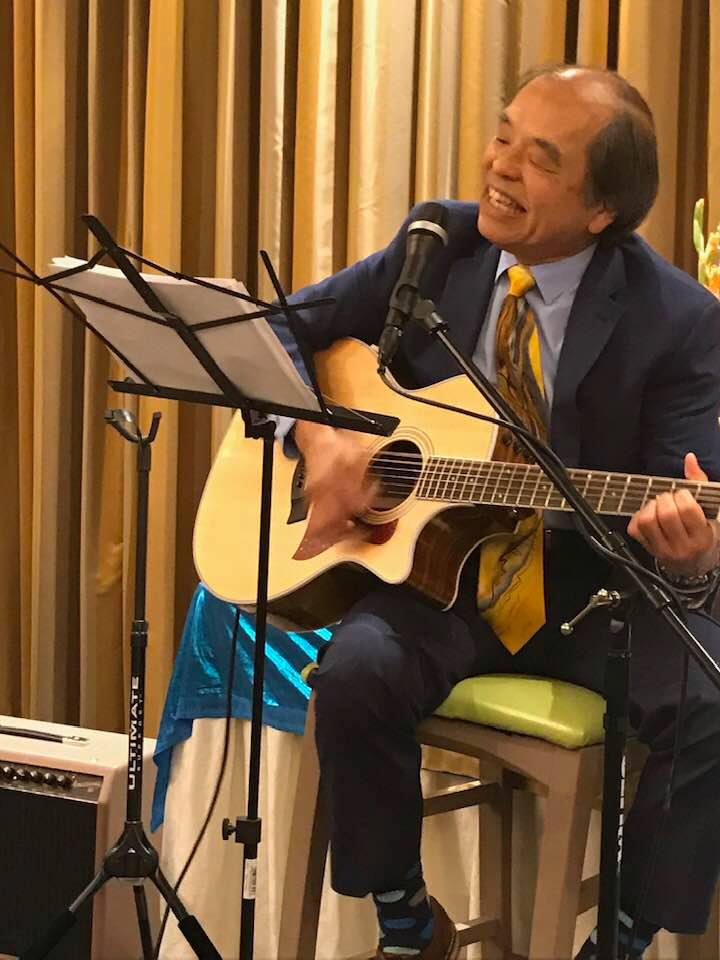
    For those of you interested in a bit of my background in relationship to the importance of healing my voice: I am a 66-year old American man of Japanese descent. Uncharacteristically for a Japanese man, I talk a lot. Morning-to-night, a lot. I’ve been a full-time spiritual teacher for the past 45 years and I teach all of the time. Officially, I teach, on the average, two to three 2-hour teleclasses a week, two all-weekend seminars once to twice a month, and 3-day retreats three-to-four times a year. As a counselor and healer, I speak to people all of the time, wherever I go. In addition, as a co-host with my wife of our 1-hour weekly radio show, Living The Miracle with Michael and Raphaelle Tamura, I have to be able to talk clearly. In addition, as a teacher, media personality, and an author, I am often invited as a guest on others’ radio, TV, and Internet shows to talk even more. I’ve even been featured in two full-length feature documentaries so far and have just been interviewed extensively to be featured in two more upcoming movies. My wife and I also travel extensively all over the world for our work and, needless to say, I have to be able to communicate clearly to get around. Besides all of that, I love talking.

    But, wait, there’s more! Although I’m not a full-time professional musician, I love to play music and sing. It gives me great joy to write and sing my own songs and, on occasion, I sing them to open our retreat events. 

    For the two years before our beloved 14.5 years old Great Pyrenees dog passed away in 2017, she got laryngeal paralysis, too! But, that didn’t faze her one bit about barking. She barked more than ever making very little sound. So, she prepared me for my challenges with not having much of a voice for a couple of years. If she could keep talking with great enthusiasm, I knew I could. Although, she didn’t have Diana to teach her how to regain her full bark – I am grateful that I did! I’m almost back to barking incessantly out my window with my full voice.

    Michael J Tamura
    Spiritual Teacher, Clairvoyant Visionary, Author of YOU ARE THE ANSWER, and Radio Show Host of Living The Miracle with Michael and Raphaelle Tamura

    Featured Intuition Expert in ground-breaking documentary film, “PGS-Intuition Is Your Personal Guidance System” (pgsthemovie.com)